Skip to content
Nick Auto Detailing home page

Correction · Studio in Connah's Quay

Paint correction and machine polishing

Paint correction is machine polishing that removes a very thin layer of clear coat to take out swirl marks, holograms, wash marring and light scratches, so the paint reflects cleanly again. It is the job that makes a tired car look new, and it is the right first step before any ceramic coating. There are levels: a one-stage enhancement lifts gloss and removes most light swirls in a day; a two-stage correction cuts out heavier defects and then refines the finish, and takes longer. Nick works in the Dock Road studio in Connah's Quay, takes paint depth readings before polishing so no panel is taken too thin, and tells you which level your car needs rather than selling the biggest one. Some scratches are too deep to polish out safely, and you will be told that too. Customers come from Deeside, Chester, Wrexham and across Flintshire.

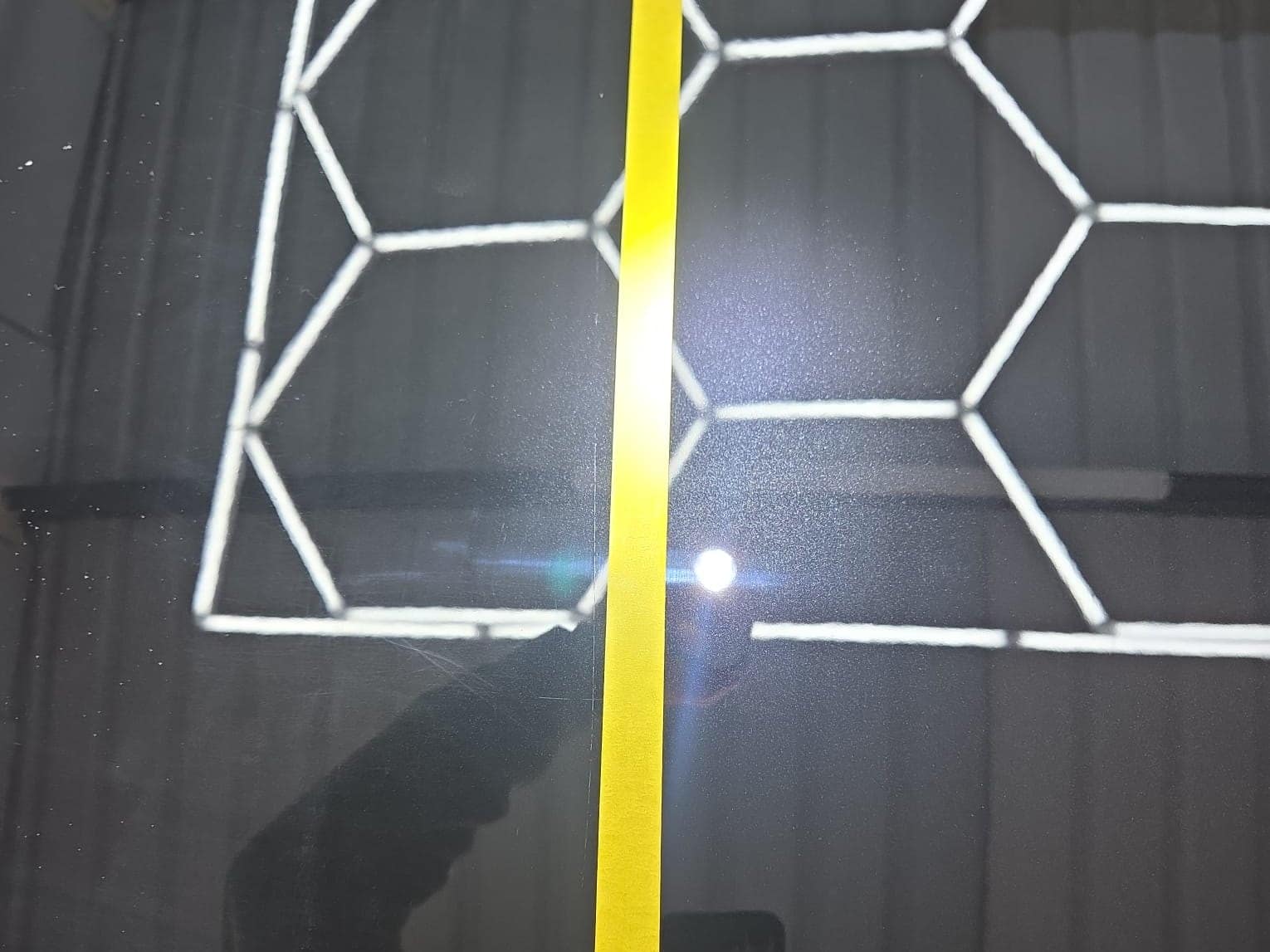
A black Mercedes panel with a tape line under the studio lights, used to compare corrected and uncorrected paint
Where
Studio in Connah's Quay, or at your home
Covering
Deeside, Chester, Wrexham, Ellesmere Port
Experience
Detailing since 2016, in Deeside since 2021
Coatings
G1 Ceramic Coating

Packages

What you can book

Vehicle size

Enhancement

Single-stage enhancement polish

For daily cars with light swirls that need their gloss back.

From£150£180£210£240

Subject to inspection

Done in the studio

  • Snow foam, hand wash and decontamination (iron and tar)
  • Clay bar
  • One machine polishing stage to remove light swirls and lift gloss
  • Paint sealant
  • Wheels, glass and trim finished

Correction

Two-stage correction

For dark or neglected paint with heavy swirls, holograms and wash marring.

From£300£350£400£450

Subject to inspection

Done in the studio

  • Paint depth readings panel by panel before any polishing
  • Full wash and decontamination
  • A cutting stage for the defects, then a refining stage for the gloss
  • Panel wipe to show the true finish
  • Protection chosen with you: sealant or ceramic coating

Protection

Correct and coat

For paint that needs correcting first, then locking in.

Please enquire: price after a look at the car

Done in the studio

  • Paint depth readings
  • Two-stage machine correction
  • Panel wipe
  • G1 ceramic coating on the paint: 1, 3 or 5-year options
  • Aftercare explained at handover

All prices are from prices by vehicle size, confirmed once Nick has seen the car: every car is different. Mobile work: the first 10 miles are free, then 30p a mile.

What the marks on your paint are

Look at a dark car in sunlight or under a petrol station canopy and you will see a web of fine circular scratches around the light. Those are swirl marks, and almost all of them come from washing: automatic brush washes, dirty sponges, and drying with the wrong towel. Holograms are the buffer trails left by a rushed machine polish. Water spots are minerals etched into the clear coat. All of these sit in the top few microns of the clear coat, which is why they can be polished out.

  • Swirl marks and wash marring: removed or greatly reduced by correction
  • Holograms and buffer trails from previous polishing: removed
  • Bird mess and water spot etching: usually removed, depending on depth
  • Light scratches that do not catch a fingernail: usually removed
  • Deep scratches that catch a fingernail, and stone chips: not removed by polishing; they need paint
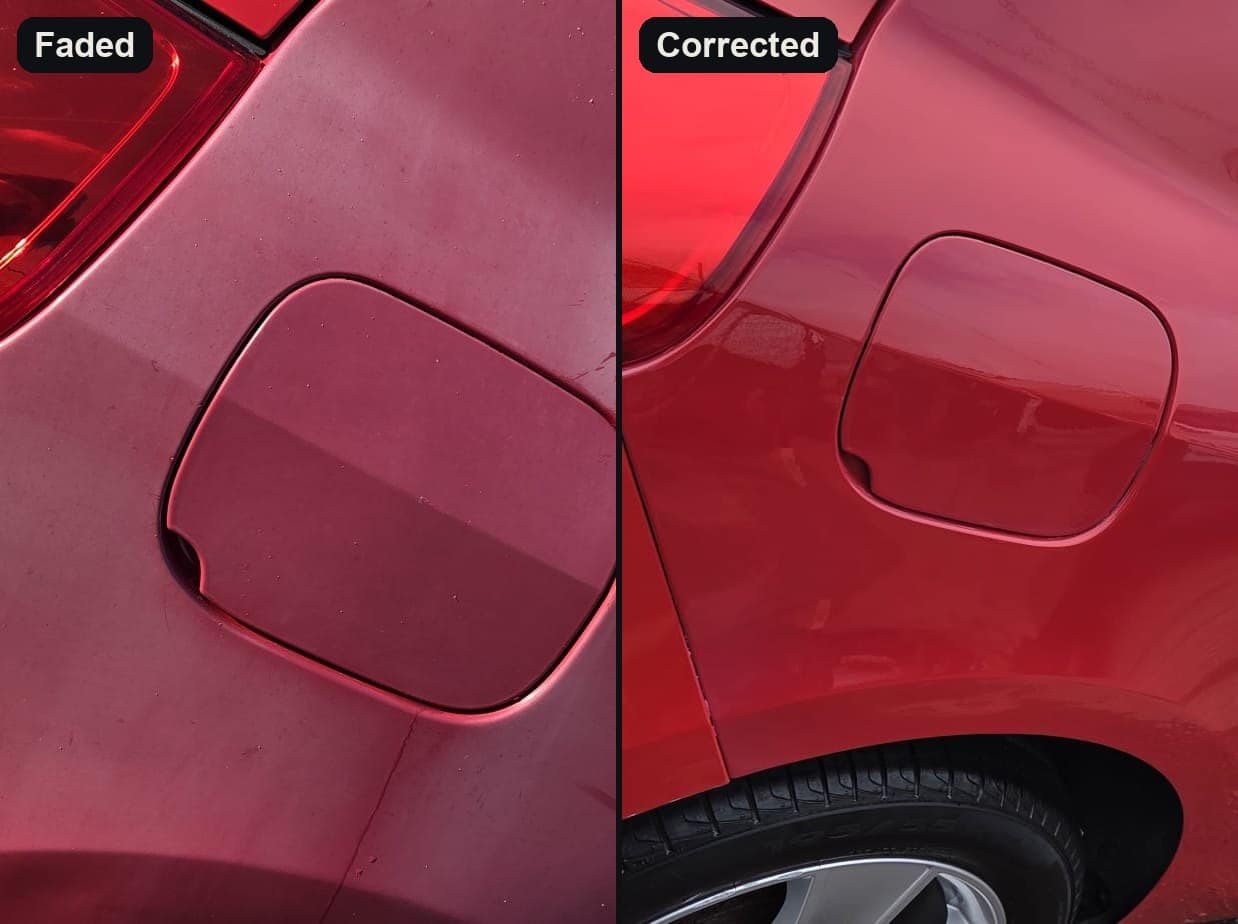
Faded, chalky red paint on a rear quarter, and the same panel corrected to a gloss
Faded red paint on the left, the same panel corrected on the right

The levels, and which one your car needs

LevelWhat it doesTypical resultSuits
One-stage enhancementOne polishing stage that removes light swirls and restores glossMost light defects gone, a big lift in glossDaily cars in fair condition, or a car being coated
Two-stage correctionA cutting stage for the defects, then a refining stage for the finishThe large majority of swirls and marring removedDark or neglected paint, cars that have lived on brush washes
Multi-stage correctionExtra cutting and spot work on the worst areasAs close to flawless as the paint safely allowsShow cars and enthusiasts, quoted after inspection

Percentages vary with the paint: some German clear coats are hard and slow to correct, some Japanese paints are soft. The inspection decides, not the price list.

How the work is done

  1. 01

    Inspection and paint readings

    Each panel is checked under the lights and measured with a paint depth gauge. Re-sprayed panels and thin edges are noted before a polisher touches them.

  2. 02

    Wash and decontamination

    The paint is washed, iron fallout and tar are dissolved, and the surface is clayed so the polishing pads work on paint, not on grit.

  3. 03

    Test section

    A small area is polished with different pad and compound combinations to find the least aggressive method that gets the result. Less paint removed is always better.

  4. 04

    Correction

    The car is polished panel by panel, with the lights and the gauge checked as the work goes on.

  5. 05

    Refining and panel wipe

    A finishing stage brings back the clarity, then the polishing oils are wiped off so the true finish can be seen, with no fillers hiding anything.

  6. 06

    Protection

    Corrected paint is bare paint. It is protected with a sealant or, better, a ceramic coating, so the finish lasts.

Nick's test section on a maroon wing: polished paint next to the untouched finish (6 seconds, no sound)

Why paint correction takes as long as it does

People are sometimes surprised that polishing a car takes a full day, or two. The time is in the method: the paint is worked a small section at a time, checked, and worked again, and every panel is different. A quick all-over polish with a heavy compound can be done in a couple of hours, and it is how holograms and burnt edges happen.

That is also why correction is done in the studio rather than on a driveway: it needs power, shade, good light, and a car that is not being rained on or blown with dust while the paint is bare.

After the correction: keep it

Correction is permanent in the sense that the removed defects are gone. The finish only stays that way if the car is washed carefully. The same brush wash that caused the swirls will put them back within months. A ceramic coating on top, and a safe wash routine, is how a corrected car still looks corrected two years later.

Reviews

What customers say

“I've been using Nick Auto Detailing's services for years, and I couldn't be happier. So far, I've had more than 20 cars detailed by them, including both my own vehicles and cars belonging to my clients.…”
Ionut FortRepeat customerEdited 2 months ago (read 23 Sep 2026) · Google, read in full
“I recently had my car detailed and I couldn't be happier with the results. Nick did an amazing job…”
Paul B.5 months ago (read 23 Sep 2026) · Google, read in full
“Excellent service and outstanding attention to detail! My car looks brand new after being serviced by Nick Auto Detailing.…”
Darius Voinea3 months ago (read 23 Sep 2026) · Google, read in full
“Highly recommended, brilliant job on my car today! Full valet inside and out.. looks brand new again. A big thank you!”
Katherine JonesFacebook recommendation (read 23 Sep 2026) · Facebook
“Absolutely amazing service and value for money.”
Google reviewerfrom Google's review summary · Google
“High-quality products, fast work, and a very professional attitude.”
Google reviewerfrom Google's review summary · Google
“Very fast and very good quality of wrapping and car detailing.”
Google reviewerfrom Google's review summary · Google

Questions

Paint correction: straight answers

How much does a paint correction normally cost?

It depends on the size of the car, the paint's condition and the level of correction. Around Chester and Wrexham, published prices start from a few hundred pounds for a one-stage enhancement on a small car and rise for two-stage and multi-stage work on larger cars. Nick prices after seeing the car, because two cars of the same model can need very different amounts of work.

Is car paint correction worth it?

It is worth it if the swirls bother you, if you are about to coat the car, or if you are selling and want the car to look its best in photographs. It is not worth doing if the car will go straight back through a brush wash, because the marks will return.

Why is paint correction so expensive?

Because it is almost all skilled labour. A proper correction is a full day or more of careful machine work on one car, with readings, test sections and refining, plus the consumables. A cheap, quick polish usually hides defects with fillers that wash off within weeks.

What is a 2 stage paint correction?

Two separate polishing stages. The first uses a more cutting pad and compound to remove the defects. The second uses a softer pad and a fine polish to take out the haze the first stage leaves and bring back full clarity and gloss.

Can paint correction remove every scratch?

No. It removes defects that sit within the clear coat. A scratch deep enough to catch a fingernail is often through the clear coat, and polishing it out would take too much paint. Those need touch-up or a bodyshop, and Nick will tell you which marks will and will not come out.

How many times can a car be paint corrected?

Not endlessly. Each correction removes a few microns of clear coat, and there is a limited amount to work with. That is why readings are taken first, why the least aggressive method is used, and why protecting the finish afterwards matters.

Next step

Get a quote, or send Nick a photo

Tell Nick the car and what is bothering you. A couple of photos on WhatsApp is the quickest way to an honest price, or use the quote form. You pay on the day, when the work is done.

CallWhatsAppQuote