
Guide · 7 minute read
Why do car windows steam up inside, and how do you stop it?
By Nick Auto Detailing · Updated 2 November 2026
The short answer
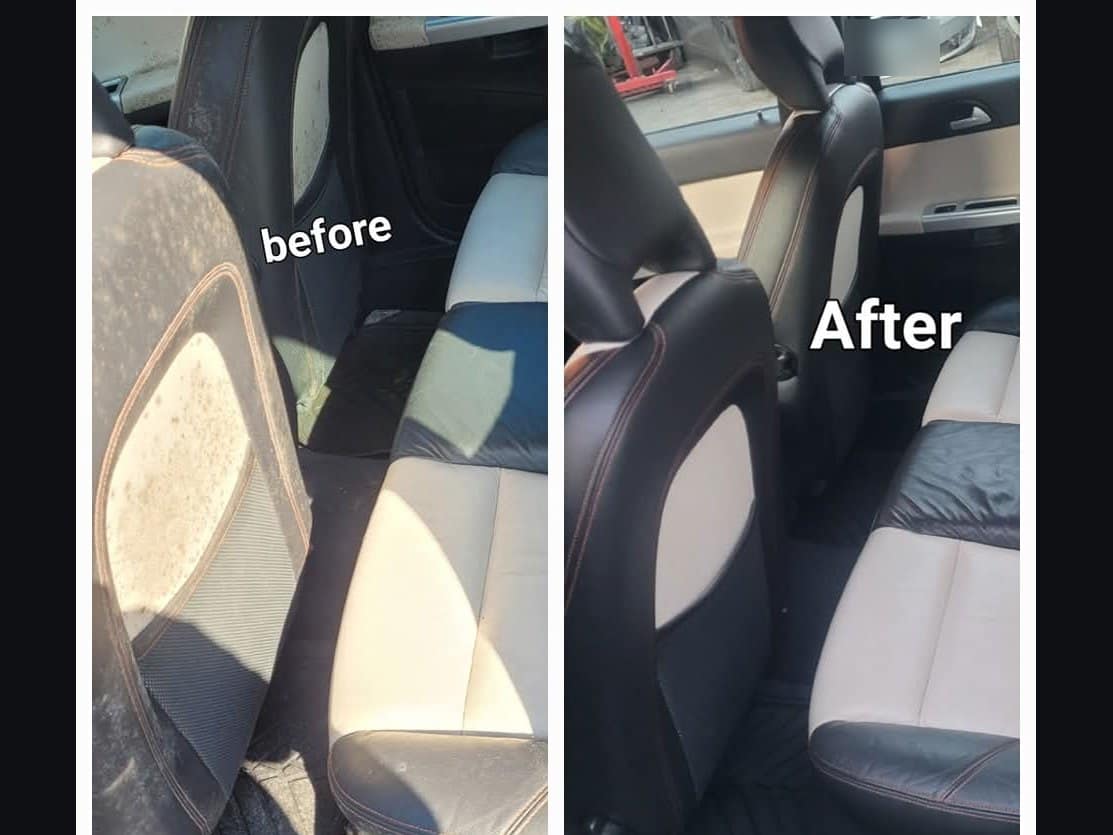
Car windows steam up inside when the air in the car is warmer and wetter than the glass, so the moisture in it settles on the cold windows as mist. A little on a cold, wet morning is normal. To clear it quickly, start the engine, put the fan on full with the air aimed at the windscreen, switch recirculation off, and run the air conditioning with the heat, because air conditioning dries the air as well as cooling it. To stop it coming back, take the water out of the car: wet coats, mats and umbrellas out overnight, the inside of the glass cleaned properly, and the pollen filter checked. If the windows mist up every morning, take ages to clear or the car smells musty, water is usually getting in or sitting in the carpet, and that is how mould starts. Find where it comes from then, before it reaches the seats and the underlay.
Why it happens
Warm air can carry more water than cold air. In a car, that water comes from the people inside, from breathing and from wet coats and shoes, from the mats, from an umbrella dripping on the back seat, and from anywhere rain is getting in. When the air touches glass that is colder than it is, it cools and can no longer hold all of that water, so the water settles on the inside of the windows as mist. That is why it is worst in autumn and winter, first thing in the morning and with a full car: the glass is at its coldest and the air at its wettest.
Two things make it worse than it needs to be. A grubby windscreen gives the moisture something to cling to, so a film of grime, smoke or fingerprints on the inside of the glass mists up faster and clears more slowly than clean glass. And a car that is damp inside, with a wet carpet or a soaked underlay, keeps putting water back into the air every time the heater warms it.
How to clear misted windows quickly
- 01
Engine on, fan on full
Start the engine and turn the fan up high with the air aimed at the windscreen. Most cars have a windscreen setting that does this in one press.
- 02
Recirculation off
Recirculation keeps reusing the damp air that is already in the car. With it off, drier air comes in from outside.
- 03
Air conditioning on, with the heat
Air conditioning pulls moisture out of the air before it reaches the glass, so heat and air conditioning together clear a screen faster than heat alone. On a cold engine the heater blows cool at first anyway; the warmth comes as the engine warms up.
- 04
A window open a little
On a cold morning the air outside is usually drier than the air inside the car. A window open slightly for the first minute or two lets the wet air out.
- 05
Heated screens on
Switch on the heated rear window, and the heated windscreen if the car has one.
- 06
Set off when every window is clear
Rule 229 of the Highway Code says you must be able to see before you set off, with the windows properly demisted. A patch wiped clear on the windscreen is not enough.
On a frosty morning
On many cars the air conditioning switches itself off when it is close to freezing outside, to protect the system, so on the coldest mornings it may not run at all. Cold outside air is dry, though, so the fan on full, fresh air and the heat as the engine warms will still do the job. Resist wiping the glass with a hand or a sleeve: it smears grease across the inside of the screen, and greasy glass mists up even faster the next morning. If you have to wipe, use a clean, dry microfibre cloth kept in the car for nothing else.
How to stop it coming back
- Take wet coats, umbrellas and bags out overnight, and dry carpet mats indoors after a wet day
- Tip the water out of rubber mats rather than leaving it to evaporate inside the car
- Clean the inside of the glass properly, windscreen corners included, with a glass cleaner and two clean microfibre cloths: one to clean, one to buff dry
- Have the pollen filter checked: a clogged one cuts the airflow to the windscreen and can hold damp, and it is a cheap part that is usually changed at a service
- Run the air conditioning for a few minutes every week or two, all year round, so it works when you need it to dry the air
- Use fresh air rather than recirculation on short winter journeys
- A reusable moisture-absorbing bag on the dashboard helps a little in a car that is dry but used a lot in wet weather; it cannot keep up with a leak
When condensation means water is getting in
Mist on a cold morning that clears in a few minutes is normal. Windows that steam up every day, stay misted on a dry day, or take a long time to clear with the fan on full mean there is more water in the car than the people in it breathe out. It is either getting in from somewhere, or it got in once and has never dried. These are the signs to look for:
- A damp, musty smell when you open the doors, often worse with the heater on
- Carpet that feels cold and damp, or wet, when you press hard into the footwell with your hand
- Water in the spare wheel well or under the boot floor
- Rust spots on the seat runners, or spots of mould on the seat belts, the seats or the bottom of the door cards
- A sweet smell and a greasy film on the inside of the windscreen that comes back after cleaning, which can be coolant from a leaking heater matrix: a job for a garage, and soon, because it fogs the screen and coolant is toxic
Where the water usually comes from
| Where | What happens | Who fixes it |
|---|---|---|
| Scuttle drains under the wipers | Leaves and grit block the drains below the windscreen, and the rain backs up and finds its way into the front footwells | A garage, or at a service |
| Sunroof drains | The drain tubes at the corners of the sunroof clog, and the water soaks the headlining and runs down the door pillars | A garage |
| Door membranes | The plastic sheet behind the door card tears or comes unstuck, and rain running down inside the door reaches the carpet | A garage or a trim specialist |
| Screen seals | Often after a windscreen or rear screen has been replaced: water runs behind the dashboard or into the boot | The company that fitted the glass |
| Boot and rear light seals | Water collects under the boot floor and in the spare wheel well | A garage |
| Heater matrix | Coolant leaks inside the dashboard: a sweet smell, a greasy screen and a wet front footwell | A garage |
| Spills and wet use | A spilled drink, a wet dog or a soaked child seat: nothing is broken, the carpet and underlay never dried | A deep clean and proper drying |
The leak always comes first. Drying and cleaning a car that is still letting water in only buys a few weeks.
Why the underlay matters
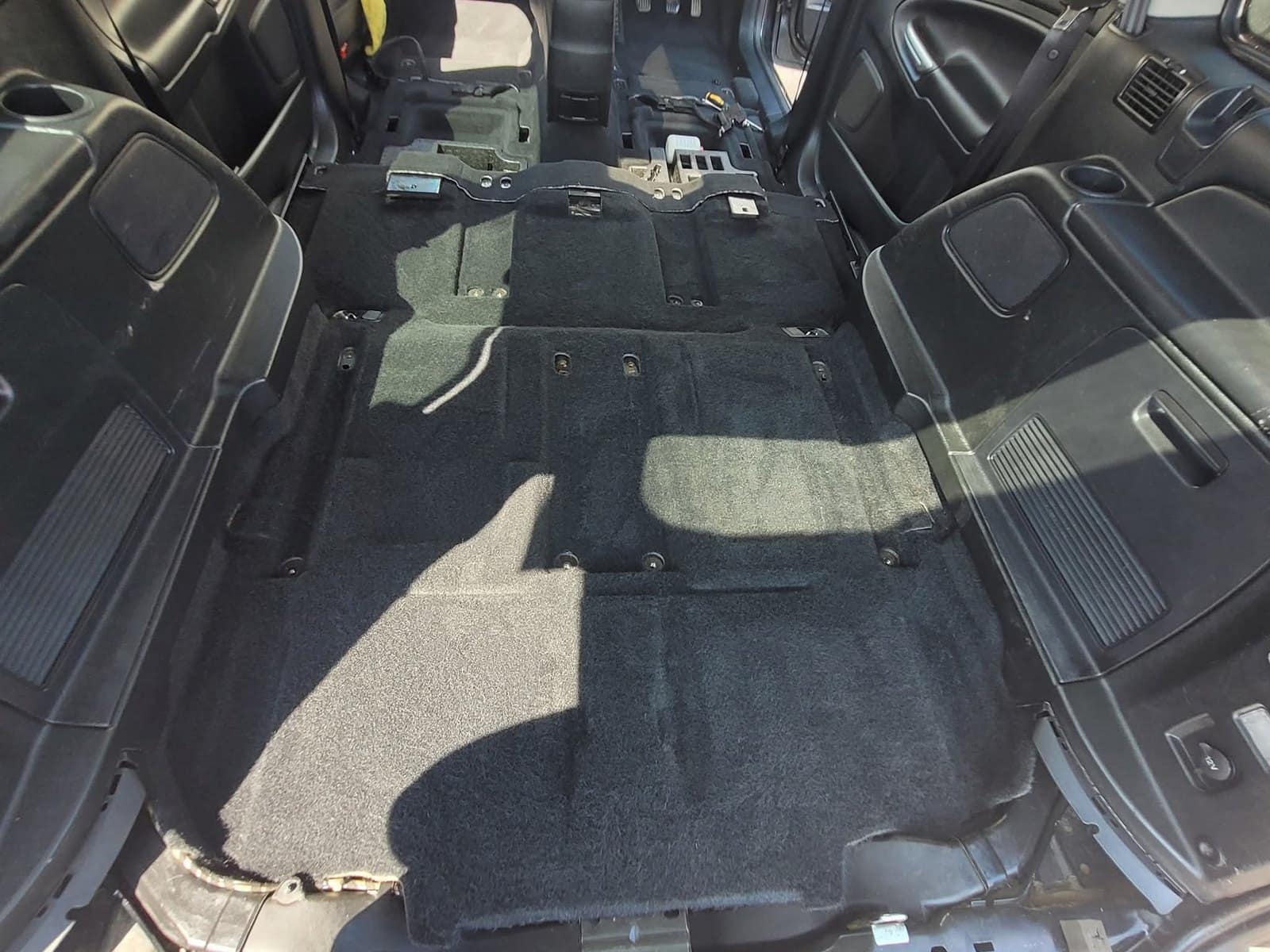
Under the carpet in most cars is a thick layer of felt or foam that deadens road noise. It soaks up water like a sponge and holds it for weeks, long after the carpet on top feels dry. In winter, with the doors shut and no sun on the car, it hardly dries at all, and every time the heater warms the cabin it lifts some of that water back into the air. That is why a car with a wet underlay steams up however good its demister is, and why it starts to smell.
Drying it properly means getting air to it, which on a soaked floor means the seats out and the carpet lifted. Front seats carry airbag and seat belt wiring, so that is not a casual job. It also has to happen after the leak is fixed, and before mould takes hold in the underlay, the carpet backing and the seat foam.
When it needs more than a demister
If the car smells musty, the carpet is wet underneath or there are spots of mould anywhere, the condensation is a symptom. Nick finds where the water is coming from first, and a seal, a drain or a heater matrix goes to a garage before any cleaning. Then the carpets and seats are extracted and dried properly, the affected areas treated, and an ozone treatment deals with the smell that is left. Mould and damp work is done at the studio on Dock Road in Connah's Quay, for cars from Deeside, Chester, Wrexham and the area around.
Questions people ask
Is it illegal to drive with misted windows?
Rule 229 of the Highway Code says you must be able to see before you set off, with the windows properly demisted. Drivers have been fined and given penalty points for setting off with only a small patch of the windscreen cleared.
Should I use hot or cold air to demist car windows?
Warm, dry air works best: the heat warms the glass and the air conditioning takes the moisture out. Start with the fan on full and the air conditioning on, and turn the heat up as the engine warms.
Why do my car windows mist up when it rains?
Rain means wet coats, shoes and umbrellas inside the car and damp air outside, so the cabin holds far more water. Fresh air with the air conditioning on clears it faster than recirculation.
Can condensation in a car cause mould?
Yes, if the car stays damp. Moisture that settles on the glass, the seat belts and the door cards every night, and soaks into the carpet, gives mould what it needs. A car that dries out between journeys rarely grows it; a car with a wet underlay often does.
Why is there water in my car footwell?
Most often a blocked scuttle drain under the windscreen, a door membrane that has come away, or, if the water smells sweet, coolant from the heater matrix. A garage finds and fixes the leak; the carpet and underlay then need drying properly, or the smell and the misting carry on.
Do moisture absorbers work in a car?
They help a little in a car that is dry but used a lot in wet weather. They cannot keep up with a leak or a soaked carpet, which hold far more water than a bag can take in.
Next step
Get a quote, or send Nick a photo
Tell Nick the car and what is bothering you. A couple of photos on WhatsApp is the quickest way to an honest price, or use the quote form. You pay on the day, when the work is done.