
Guide · 7 minute read
How to clean car seats, fabric and leather, without making them worse
By Nick Auto Detailing · Updated 2 November 2026
The short answer
To clean fabric car seats, hoover them thoroughly first, then work one panel at a time, from seam to seam, with an upholstery cleaner and a soft brush, and take the dirty liquid back out with clean, damp microfibre cloths or a wet vac. Use as little water as you can: a soaked seat leaves a brown ring as it dries and can stay damp in the foam for days. Leather is different. Most car leather has a protective top coat, so it needs a pH-balanced leather cleaner, a soft brush and a wipe, then a conditioner, and never household sprays, bleach or a melamine sponge. Test any product on a hidden part of the seat first. Old stains, smells such as milk or a pet accident that have soaked into the foam, and mould need hot-water extraction, and that is the point where a professional clean is worth paying for.
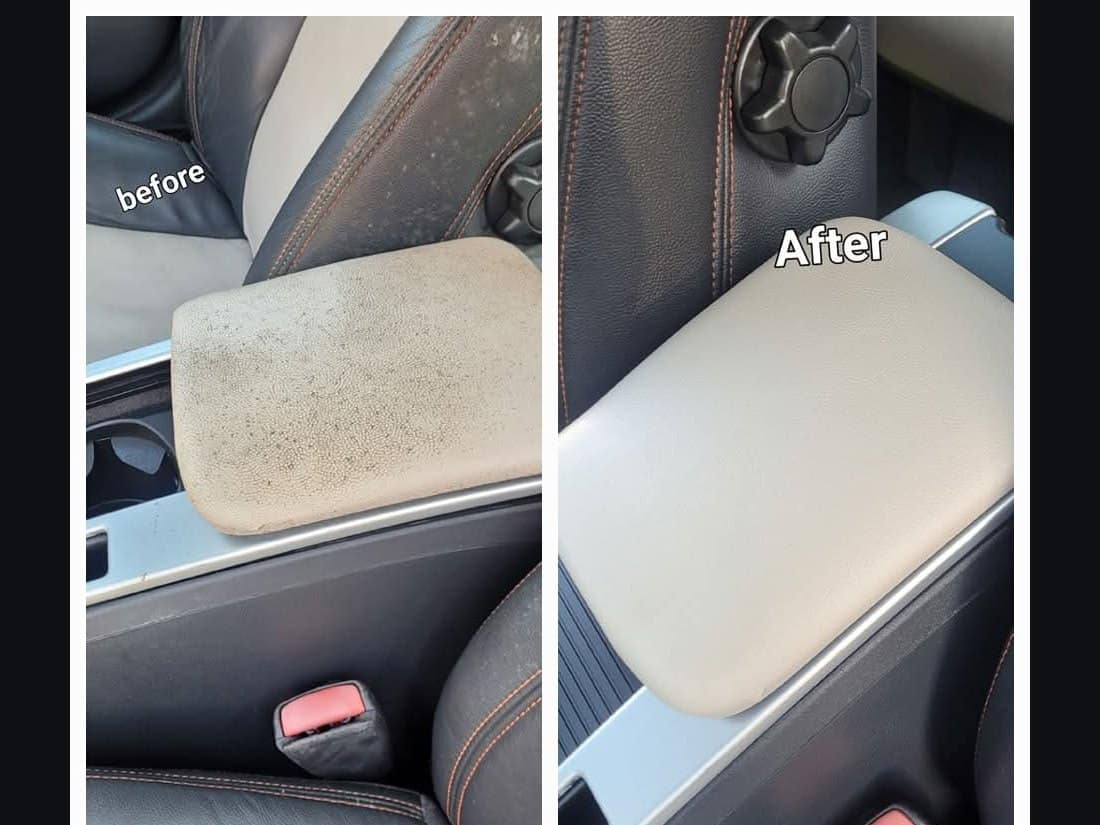
Before you start
- Check what the seats are: fabric, leather, faux leather and suede-effect microfibre each need a different approach, and the handbook or a dealer can tell you
- Hoover everything first, with a brush attachment and a crevice tool down the seams; most of what makes a seat look dirty is loose grit and crumbs, and wetting them turns them into mud
- Test every product on a hidden part of the seat, such as the back of the base or under a headrest
- Pick a dry, mild day, or a garage, and leave time for the car to air afterwards: seats dry slowly in a cold, shut car
- Have plenty of clean microfibre cloths ready, because a dirty cloth moves the dirt around rather than taking it away
Fabric seats, step by step
Most fabric seats can be cleaned well at home with a decent upholstery cleaner, a soft brush, a pile of microfibre cloths and, ideally, a wet vac. The method matters far more than the product.
- 01
Hoover
Brush the fabric firmly while you hoover, to lift the dirt out of the weave and the seams.
- 02
Pre-treat the marks
Spray a fabric or upholstery cleaner, diluted as the label says, onto the stains and leave it for a minute or two. Do not let it dry on.
- 03
Clean the whole panel
Work the cleaner over the whole panel, from seam to seam, with a soft upholstery brush in small circles. Cleaning only the stain leaves a clean patch with a ring round it.
- 04
Take the dirt back out
Blot and wipe with a clean, damp microfibre cloth, turning it often, or better, use a wet vac to pull the liquid back out. Whatever stays in the seat is dirt that will wick back to the surface.
- 05
Dry it right through
Leave the doors or windows open, or run the heater with the fan on and fresh air, until the seat is dry right through and not only on top.
Why cleaned seats get watermarks
The brown ring that sometimes appears around a cleaned patch is a tide mark. Water carries dirt from deep in the foam out to the edge of the wet area and leaves it there as the seat dries. It happens when a seat is soaked rather than cleaned, and when only the stain is wetted rather than the whole panel.
The fix is the same as the prevention: less water, the whole panel cleaned evenly from seam to seam, and the liquid taken back out rather than left to dry in. A tide mark that has already formed usually comes out the same way, by cleaning the whole panel again.
Leather seats
Most car leather is coated: the colour and a clear protective layer sit on top of the hide, which is why it wipes clean and why harsh products do so much damage. Body oils, sun cream and dye from jeans build up on that coating, and a seat that has gone glossy is usually carrying a film of grime; clean leather in most cars has only a soft, low sheen.
Clean it a section at a time with a pH-balanced leather cleaner and a soft brush, and wipe each section off with a damp microfibre cloth before it dries. Get into the stitching and the creases, where the dirt sits. Finish with a conditioner or a leather protectant, used sparingly and buffed off, so the seat is not left slippery. On perforated or ventilated seats, put the product on the brush rather than spraying it onto the seat, so nothing runs into the holes.
What not to use
| Product | Why it goes wrong |
|---|---|
| Washing-up liquid | Foams heavily and is hard to rinse out of fabric; what is left behind attracts dirt, and the seat looks grubby again within weeks |
| Bleach and household sprays | Can strip the colour from fabric and the protective coat from leather |
| Melamine sponges | They are a fine abrasive: on leather they rub through the top coat and leave a dull patch that no cleaner will bring back |
| Household and baby wipes on leather | Handy for a spill, but they are not made for leather and leave a residue; a proper leather cleaner does the job |
| Silicone shine sprays | Leave seats slippery and greasy, and the film holds on to dirt |
| A lot of water | Soaks the foam, leaves tide marks and can leave the car smelling damp for days |
| Steam on leather or suede-effect fabric | Heat and moisture can damage the coating and the finish; steam is for fabric, plastics and vents, used with care |
Whatever the product, test it on a hidden part of the seat first.
Stains and smells that need more than a home clean
Some things a home clean will not shift. Milk, vomit and pet accidents soak down into the seat foam, and the smell comes back every time the car warms up, however clean the surface looks. Old drink stains, dye from jeans on light leather, ink, and stains that were once cleaned with the wrong product are often set in the fabric. And a seat with mould on it has a damp problem behind it, not only a stain.
These need hot-water extraction, where a machine rinses the fabric and the foam with clean water and pulls it straight back out, sometimes with the seats out of the car, and an odour treatment where a smell has gone into the foam. Nick does interior deep cleans at your home or workplace from a fully equipped van, across Deeside, Chester, Wrexham and Flintshire, and a photo of the seat on WhatsApp is usually enough to say what is likely to come out.
Questions people ask
What is the best thing to clean fabric car seats with?
A fabric or upholstery cleaner made for cars, diluted as the label says, with a soft brush and clean microfibre cloths, or a wet vac. The method matters more than the product: little water, the whole panel, and the dirt taken back out.
Can I use a carpet cleaner on car seats?
A home carpet cleaner with an upholstery tool can work well on fabric seats, because it rinses and pulls the water back out. Use the least water it allows, do the whole panel, and dry the car properly afterwards. Never use it on leather.
Can I use washing-up liquid on car seats?
It is better avoided. It foams, it is hard to rinse out of fabric, and the residue it leaves attracts dirt. A dedicated upholstery cleaner rinses out cleanly.
How often should car seats be cleaned?
Hoover them every few weeks. Fabric seats usually need a proper clean once or twice a year; leather is best cleaned and conditioned every few months, more often if it is light-coloured or the car is used every day.
How do I get a smell out of car seats?
Find the cause first. Food and drink smells usually go with a proper clean and extraction. Milk, vomit and pet urine that have soaked into the foam need extraction and an odour treatment, and a damp, musty smell means there is water in the car.
Next step
Get a quote, or send Nick a photo
Tell Nick the car and what is bothering you. A couple of photos on WhatsApp is the quickest way to an honest price, or use the quote form. You pay on the day, when the work is done.